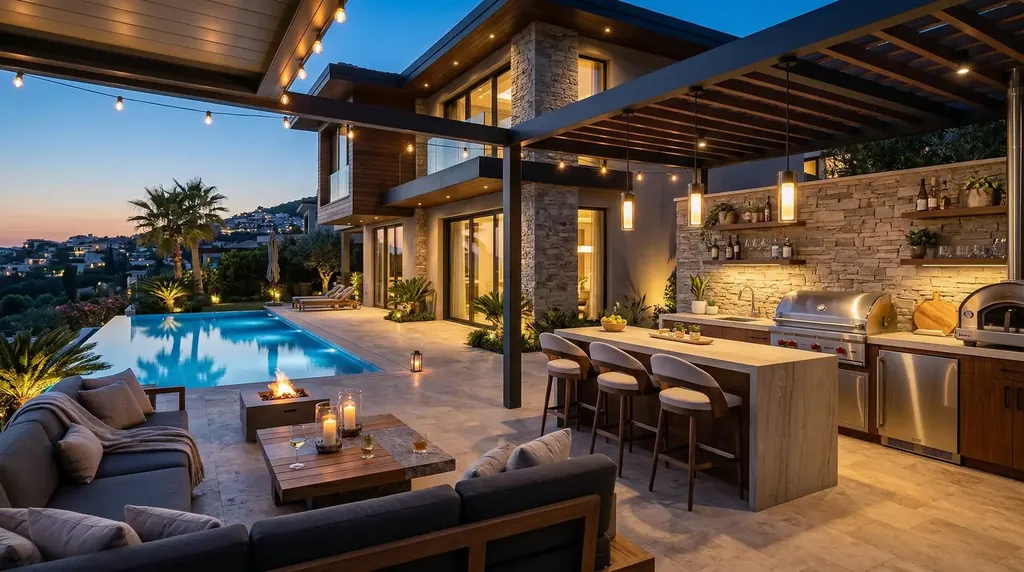

Few elements change a garden as completely as a pool. It becomes a focal point, a source of light and movement, and for many households the centre of summer life. Yet the right pool depends less on fashion than on your plot, your climate and the way you actually swim. This guide compares the main pool types, then looks at finishes, placement, covers, lighting and care.
01Infinity and Overflow Pools
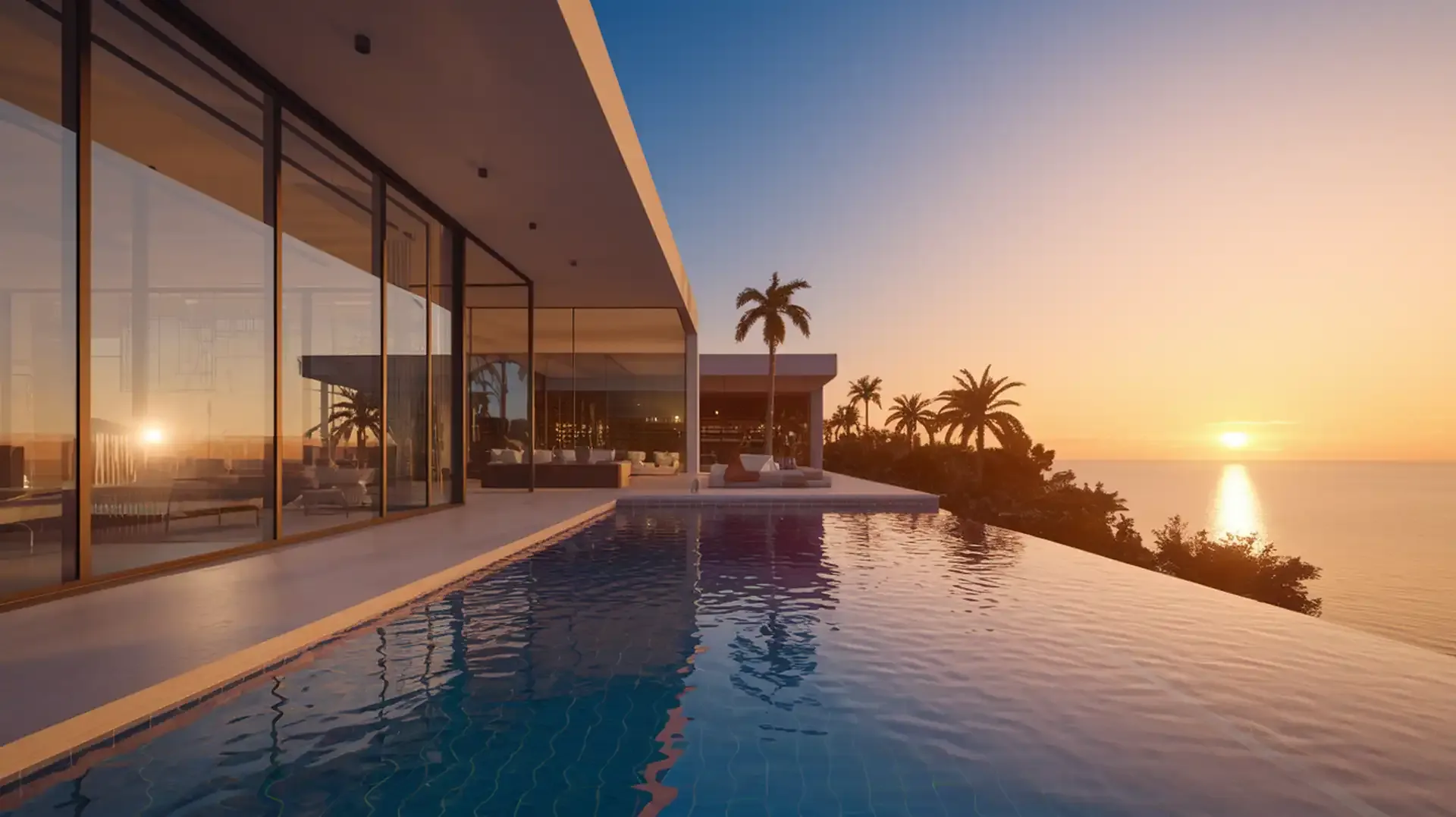
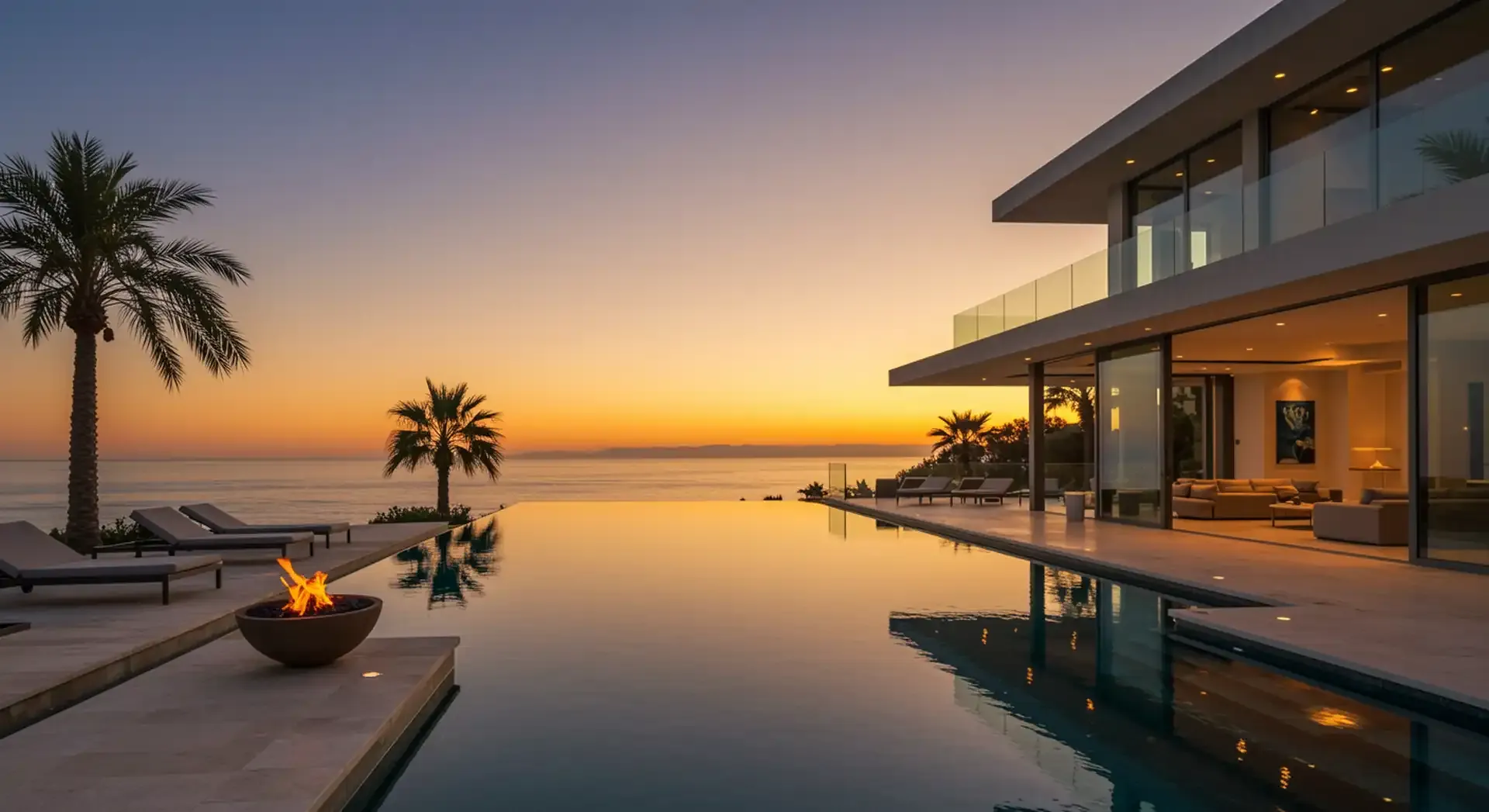
An infinity or vanishing edge pool lets water spill over one or more sides into a hidden catch basin, so the surface appears to merge with the view beyond. It is at its most convincing on a sloping site that looks out to the sea, a valley or open countryside. On a flat plot with a fence or a neighbouring house in the background, the effect is lost and the added complexity is hard to justify.
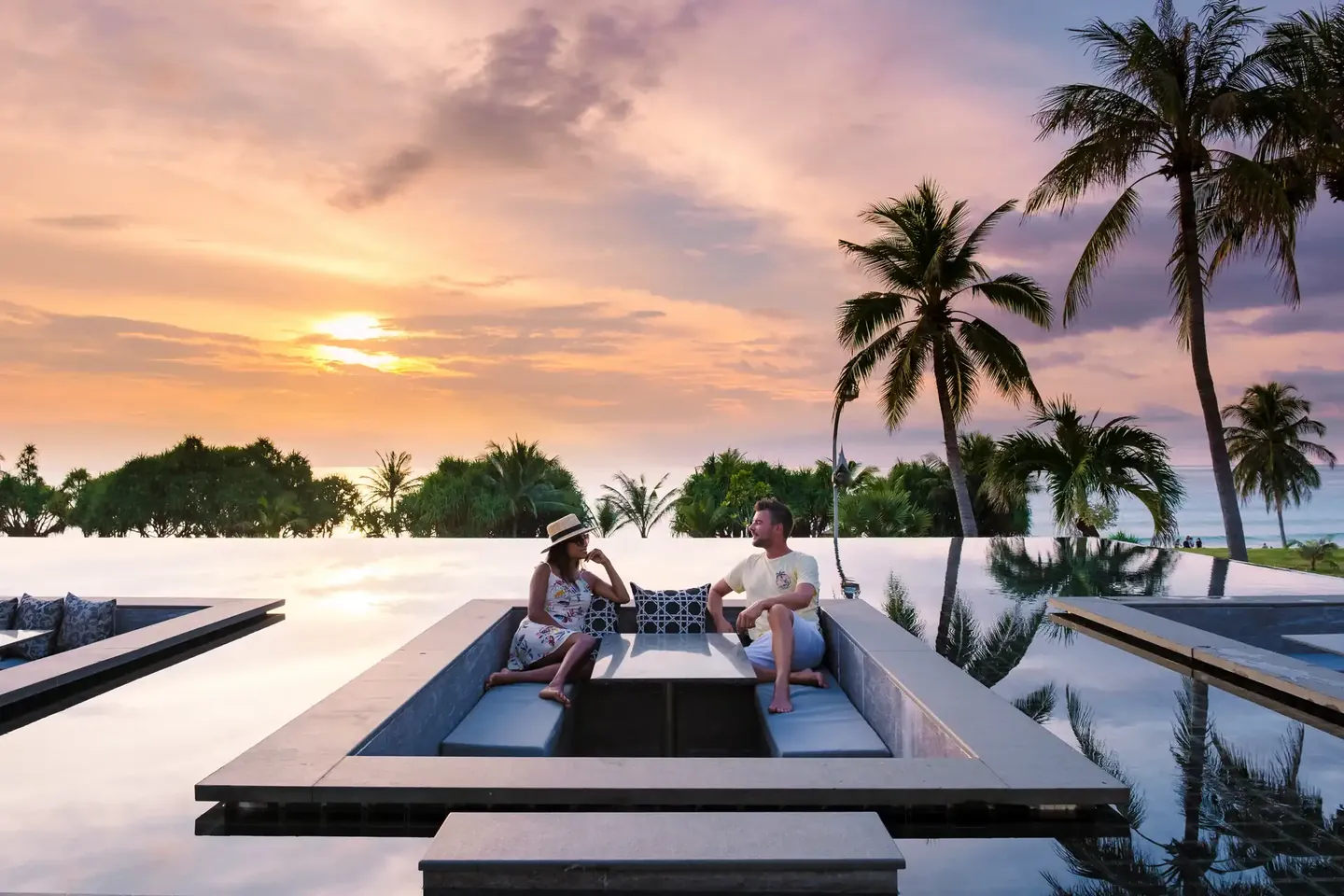
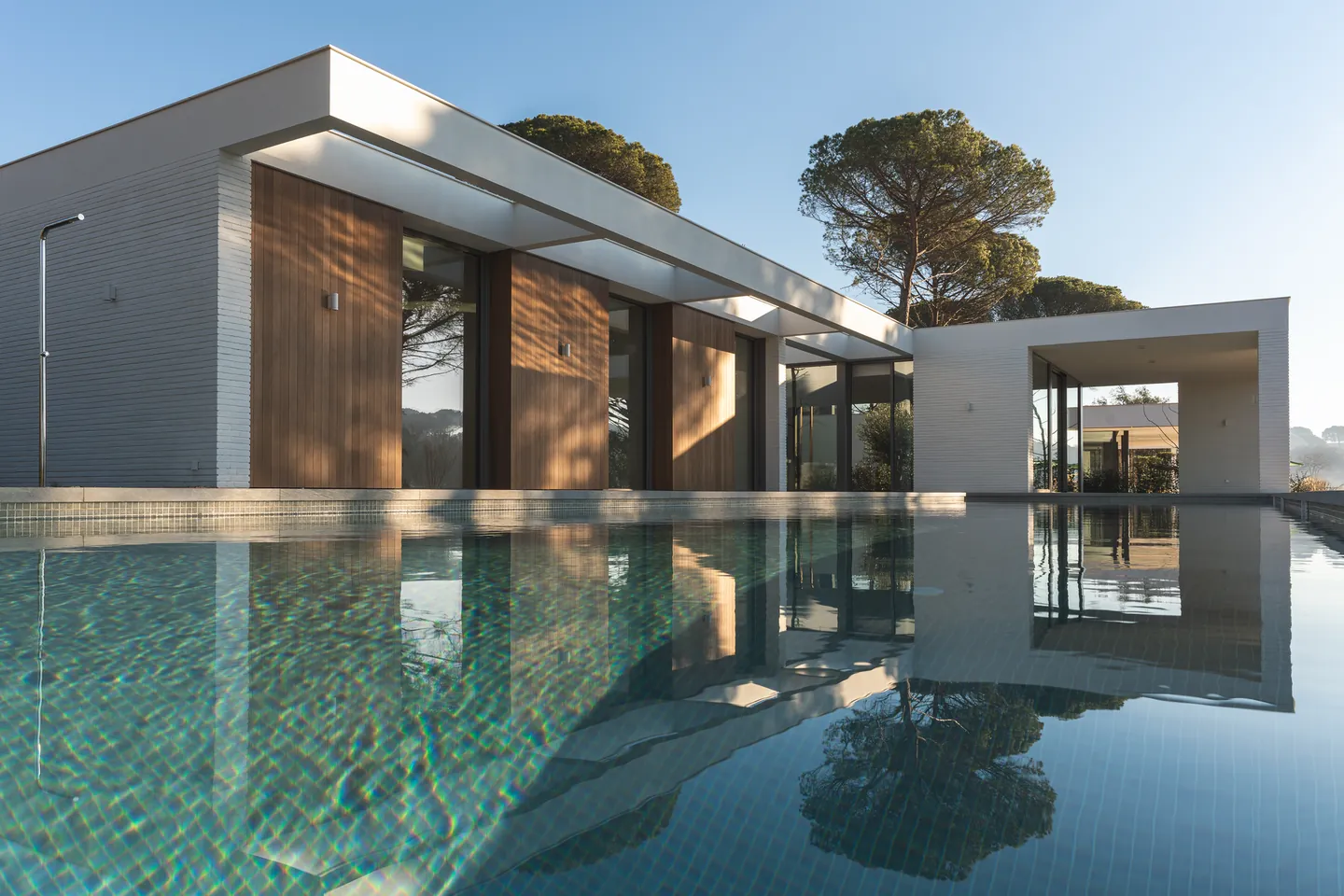
A related option is the perimeter overflow pool, in which the water rises flush with the surrounding paving and drains into a narrow channel on all sides. The result is a mirror-like surface that reflects sky, trees and architecture, ideal for modern houses with clean lines. Both systems need a balance tank, careful engineering and precise levels, and both produce a gentle sound of moving water that some owners love and others find distracting near bedrooms.
The catch basin and its retaining wall are part of the design too. Seen from below, from a lower terrace or the garden, the overflow wall becomes a façade of its own and should be clad or planted with the same care as the house.
02Lap Pools and Family Pools
A lap pool is designed for swimming lengths. It is long and narrow, with a consistent depth and no steps or ledges intruding into the swimming line. As a rule of thumb, it should be long enough for a good number of unbroken strokes before each turn, and its slim shape often suits side gardens, boundaries or terraces running along the house. A clean rectangle with a dark interior emphasises length and calm.
A family pool prioritises play and social time. Wide entry steps, a shallow area for children, a sun ledge where loungers can stand in a few centimetres of water and built-in seating all make the pool more usable for everyone. Depth can vary, but many designers now avoid very deep ends unless diving is genuinely planned, since a moderate depth throughout is easier to heat, more versatile and more comfortable for mixed ages.
03Natural Pools, Plunge Pools and Spas
A natural or bio pool relies on a planted regeneration zone and biological filtration instead of chemical treatment. The swimming area is separated from shallow planted beds where the water is cleaned as it circulates. The result feels like a pond you can swim in, with soft edges, visiting wildlife and changing reflections. It needs more space than a conventional pool, accepts some natural variation in clarity and suits country houses and informal gardens particularly well.
Plunge pools and spas answer a different need. A plunge pool is compact, often deep enough to stand in and cool off, and fits courtyards, roof terraces and small gardens. A spa offers warm water and massage jets and is used through much of the year, so it should sit close to the house with a short, sheltered route from the door. Spas can be freestanding or built into the pool edge with a gentle overflow into the main basin.
- Infinity edge: sloping sites with an open view
- Perimeter overflow: modern architecture and reflective water
- Lap pool: dedicated swimmers and narrow plots
- Family pool: children, guests and social use
- Natural pool: larger gardens and a chemical-free approach
- Plunge pool and spa: compact spaces and year-round use
04Finishes: Stone Coping, Mosaic and Render
The interior finish sets the colour of the water. Pale finishes give the bright turquoise associated with southern coastlines, while greys, greens and dark tones create a deeper, lake-like colour that sits naturally in green gardens and mirrors its surroundings. Glass or ceramic mosaic is durable and precise and allows subtle gradations, while polished render and fine aggregate finishes offer a soft, seamless surface with a natural texture.
Coping is the frame of the pool and deserves the same attention as the interior. Natural stone with a honed or lightly textured surface stays comfortable underfoot and offers good grip when wet. Choose a stone that is suited to pool water and, where winters are cold, resistant to frost. Extending the same material across the surrounding terrace creates a calm, continuous surface that lets the water take centre stage.
Edge details make a considerable difference to the finished look. A thin, crisp coping suits contemporary architecture, while a thicker, rounded stone edge feels traditional and is comfortable to sit on. Steps can be finished in the same material as the interior or picked out in stone so they remain clearly visible.
05Placement for Sun, Privacy and Views
Position the pool where it receives sun for most of the day, particularly in the afternoon when it is used most. Watch the shadows cast by the house, trees and walls across the year before fixing the location. Shelter from the prevailing wind keeps the water warmer and reduces evaporation and debris, while deciduous trees close to the water will fill the skimmers every autumn.
Think about privacy from neighbours and from the house itself. A pool that is visible from the living room adds light and movement to the interior view, yet bathers may prefer a little distance from the kitchen. Plan the route from a changing room or outdoor shower, leave space for loungers on the sunniest side, and keep the plant room and equipment where their sound will not reach terraces or bedrooms.
Consider the geometry of the house as well. Aligning the pool with a main room, a terrace or a garden axis gives it a sense of belonging, while turning it slightly to catch a view can be just as effective. Leave enough paved or planted space around the water that it never feels squeezed against a boundary.
06Covers, Lighting and Maintenance
A cover is one of the most useful additions to any pool. Automatic slatted covers, which can be concealed beneath the deck or in a recess at one end, keep out debris, retain heat and add a safety barrier when the pool is closed. Discuss the cover early in the design, since a concealed mechanism must be built into the structure rather than added later.
Lighting transforms the pool after dark. A few well-placed underwater lights with a warm white output usually look more refined than many colour-changing points. Light the surrounding planting and steps as well, so the pool reads as part of the garden at night rather than as a glowing box. For maintenance, ask about filtration, water treatment, heating and access to equipment, and plan for regular professional servicing, especially for overflow and natural pools.
- A concealed automatic cover, designed in from the start
- Warm white underwater lighting, placed with restraint
- A quiet plant room away from bedrooms and terraces
- Easy access for cleaning, servicing and winter preparation
At a glance
- Choose an infinity edge only where an open view justifies it.
- Match the pool type to how your household actually swims.
- Observe sun and wind across the seasons before fixing the location.
- Design the cover, lighting and plant room in from the start.
Questions & answers
Is an infinity pool suitable for a flat garden?
Usually not. An infinity edge relies on a drop in level and an open view beyond, so that the water appears to merge with the landscape. On a flat plot, a perimeter overflow pool with water flush to the paving creates a similar mirror effect without needing a slope, and it often suits contemporary architecture better.
How does a natural pool stay clean without chemicals?
A natural pool circulates its water through a planted regeneration zone and biological filters. Plants and microorganisms take up the nutrients that would otherwise feed algae, while skimmers remove leaves and debris. The water stays clear enough to swim in, though it may vary slightly with the seasons, and the system needs regular care of both planting and filters.
What colour should the interior of a pool be?
It depends on the setting and the effect you want. Pale finishes produce bright turquoise water that suits sunny, coastal locations. Grey, green or dark finishes create deeper, reflective water that blends into gardens and landscapes and can feel more natural. View large samples underwater or visit finished pools before deciding, since colour changes considerably with depth and light.